
Entertainment
Jordan Spieth taught me 10 lessons in 45 minutes. Here they are

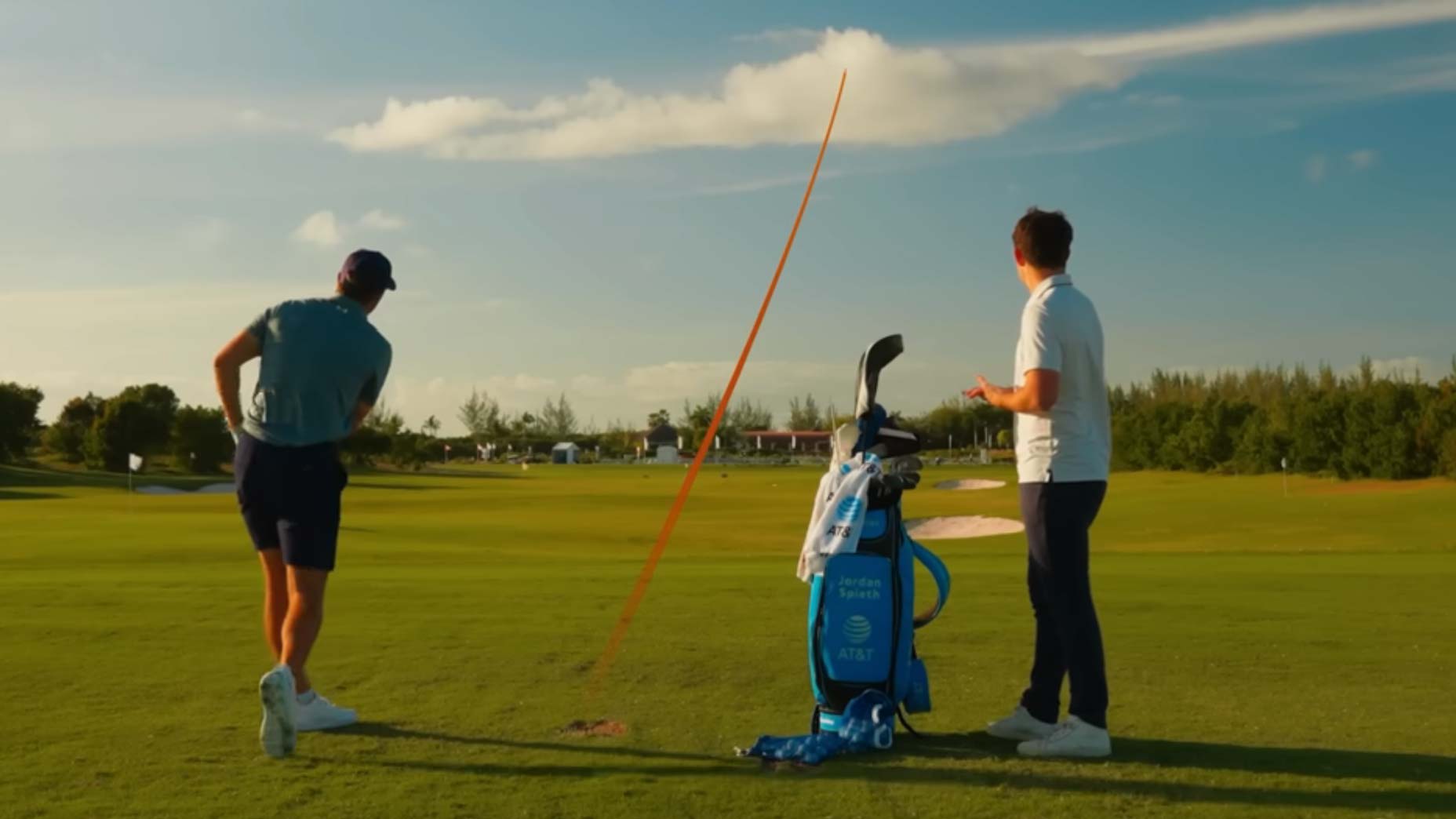
halfway through a brain-bending 45-minute range session with Jordan Spieth, I ask what might be a very dumb question.
Get Sports Updates on WhatsApp
Join our WhatsApp channel to receive breaking sports news and insider stories.
Join us on WhatsApp“If you could turn your brain completely off and just swing the golf club, what would happen?”
Spieth doesn’t hesitate, which suggests he’s thought plenty about this before. That’s always a safe assumption with Spieth, who may have the most active mind in professional golf: he’s thought plenty about this before.
“It’d be horrendous,” he says. “If you said ‘don’t think and just swing’ — I’ve never actually played like that. I’ve always had a manipulating feel through my backswing.”
Spieth explains that he needs to have something to focus on as he takes the club away or things go awry.
“Out of a level of 10 difficulty going back, I always like it to be somewhere like a four or five for what to think about. And that normally sets the timing up. That’s just in the backswing; from there it’s be an athlete and hit the shot. But if I think about nothing, I get all sorts of messed up.”
We’ve been filming “Warming Up” episodes for two years now, and it’s been arguably the coolest thing I’ve gotten to do in this job — a lineup of bucket-list interviews and pinch-me moments. But I’ve stayed greedy, too, keeping Spieth’s name atop my wish-list from Day 1.
At last, this winter, through a happy combination of persistence, acquiescence and scheduling, we landed the big fish: Spieth agreed to spend some time with us on a driving range of his choosing — and to open up a window into his beautiful golfing mind.
You can watch the full episode below or on YouTube here. But if you’re in reading mode, below you’ll find 10 lessons — about his game, golf in general or life in general — that’ll stick with me.
10 lessons from Jordan Spieth
1. Be an athlete and an artist.
Mess around, Spieth says, especially as you begin your warmup. He grabs a 60-degree wedge and starts with some quarter- and half-swing wedge shots, hitting his first balls only 20 yards or so, working his way up a few yards at a time.
What’s important to finding his feel is varying the types of shots he’s hitting, even at short range.
“They’re not all the same shot,” he says. “I’ll work some different heights and then when I get to about 60 yards I’ll start hitting three trajectories at 60 yards.”
In the meantime he messes around with opening the face, creating spin, hitting one shot he’ll hope will hit and stop and another he hopes will run out more. He’s using different planes of motion, he says, to try out different shots.
“I’m just kind of being an athlete, being an artist with the wedge, and then as you get more into full shots, you’ve maybe got a little bit better club-face control than if you just started doing it from the get-go.”
2. Have intention.
When Spieth first played on the PGA Tour he was a high-school phenom with no real warm-up routine. One of the things he learned watching the pros? Do everything with intention.
“I didn’t go to the gym when I was 16 before [the round], no warm-up, and I’d just kind of hit whatever I wanted to [on the range],” he says. That was the difference. “To watch guys actually deliberately have intention even in their warmups versus just kind of getting loose.”
3. Practice real shots from the course.
“There’s some shots that you might need on certain holes out there,” Spieth says. Because it’s golf, you don’t know exactly what shots you’ll face when you get out on the course. But you do know a few of ’em: “The par-3s, I’ll ask that yardage and I’ll make sure I hit that club. You always say you’re ‘second-team All-American;’ [when you hit two balls] that second ball’s amazing. Well, I’ll just make sure that my second ball is the first ball that I hit out on that par-3. So you’re trying to hit the shot, you see it, you feel it, you know it’s good.”
4. Work the ball towards the hole (at your own risk)
Spieth grew up playing a draw but now hits majority fades. Still, when he’s playing his best he likes to be able to move it both ways so that he can take on every hole location — especially given the PGA Tour likes to tuck them in corners.
“They just have these pins where it’s like, if you play a fade, you sometimes just can’t get it close. It’ll be spinning with the hill on a left pin and you just can’t get it close. And that’s probably okay, but it’s a pet peeve of mine. It bugs me that it’s not going to be working towards the hole. So I always want to be able to hit the draw.”
But there is a protective measure Spieth takes to make sure he’s not getting too risky as he takes on every pin.
“Every time I’m hitting a draw or a fade, I’m training myself that that ball cannot over-curve,” he says. “If it under-curves, I’m in the fat part of the green. If it over-curves, I’m short-sided.”
Under-curving, then, is the goal.
5. Appreciate your 7-iron — it’s the best club.
I liked that Spieth was able to go full golf-nerd — talking planes of motion, degrees of rotation, swing DNA, etc. — while also making the simplest statement of them all: he likes the way 7-iron looks the most.
“I’m holding 7-iron. I love my 7-iron,” he says. “It’s like, my favorite iron to look at. It’s the perfect rectangle. It just has that look to me.”
For those curious, Spieth generally hits 7-iron anywhere from 175 to 190 yards, depending on the conditions — though at the Open Championship all rules go out the window and he may hit 7 from 150. As for when to hit 7 vs. 6? That depends not just on yardage to the hole but pin position, too; if he has to stop the ball quickly he’d rather step on a 7-iron than try to hit a baby 6. Also, again, it looks the best.
6. Remember: Golf can work in opposites.
Explaining his current feel, Spieth hits on something interesting:
“A lot of times the game works in opposites,” he says. “You’ve gotta feel right to go left, y’know? Like, whenever someone’s slicing it, [tell them] to swing to the right. They’re like, ‘no way, it’s gonna go further right,’ but they square it up.”
I wonder if Spieth dishes out anti-slice advice every pro-am hole he plays. He says he’ll wait until prompted.
“I try to wait until someone asks because I don’t really want them giving me advice unless I were to ask,” he says. Wait — Jordan Spieth is getting advice?! “Between pro-ams and mail and everything, I promise I’ve had all kinds of advice. I don’t see or hear it all, but yeah.”
7. Making a swing change? Stress-test it.
As Spieth has chased a complex hybrid of his past and present golf swings (the backswing depth of his 2017 self, the hand path of his younger self, the gym routine of his current self, etc.) he has tried to work in that new swing first in a controlled range setting and gradually gotten it ready for competition.
“I’ve moved from hitting most of the shots in a hitting bay on video the first eight weeks to checkpoints in the hitting bay and then outside … and then do performance,” he says. Performance means setting up a combine for himself, stress-testing specific shots on command, three-quarters shots, different feels and shapes in different conditions.
“It had to be swing-focused for a little while … and while it requires a little more focus than I’d like to play at my best, I’m able to make really good swings on the course, which — it took a while to get to that level.”
8. Find a good measuring stick.
For Spieth, that’s World No. 1 Scottie Scheffler, who happens to live near Spieth and serve as a frequent sparring partner.
“When we play games at home, I play with play with Scottie quite a bit at home and we play with guys that are anywhere from a plus two to a two handicapper, and the separation isn’t what it would be if we were playing out [on Tour] just strictly because of what you’re mentioning, [tucked] pin positions,” he said.
As for playing with Scottie?
“Obviously if you’re playing playing with Scottie, you got a pretty good gauge on where you are compared to everyone else, right? So it’s helpful.”
9. Forgive the past.
This comes in perhaps Spieth’s most profound answer, one I keep thinking more about. What’s it like, I ask, to have set such a high standard at such a young age that he’s constantly compared to his own greatness? Here’s his answer in full:
“It can be very challenging at times,” he says. “Like, I wouldn’t wish a couple years of the last five, ten years on a lot of people. You live in problem-solving mode, trying to figure out how to be, whatever. And to know a lot of it is mechanics is even more frustrating because it’s not like everything’s fine and it’s just coming. It’s like no, I gotta actually—
“But at the same time, knowing that once I get the club position the way, at least the way my DNA is, the way I want it to, then good things are right around the corner. Golf’s funny, right? I’m 32, so I could play at a very high level for another 10 years, and that’s a long time. That’s a full career for most any other sport. So I can forget about — I can forgive the past, I can be pumped about what I’ve done, I can forgive the times that were hard and just be forward-focused with some scar tissue that can help, you know. So as long as I stay in that mindset, I do believe that good things are coming.”
10. Be a goldfish.
I didn’t expect Spieth to quote Ted Lasso, but he says he leans on a mantra from the show: Be a goldfish.
The thing about goldfish is they have 10-second memories. Their pasts don’t dictate their futures. And they have simple, quiet minds.
Spieth is, of course, the anti-goldfish. That’s what makes him such an interesting golfer and thinker. A goldfish wouldn’t comb through golf swings through different points in his career, looking for the best stuff. A goldfish wouldn’t have a swing thought as he stands over the ball. Maybe Spieth knows that he — like most of us — could use a little more goldfish.
My sense leaving the interview? I like Jordan Spieth the way he is.






Entertainment
Paige Spiranac’s surprising NFL fandom confession triggers heated debate over loyalty, authenticity, and fan culture
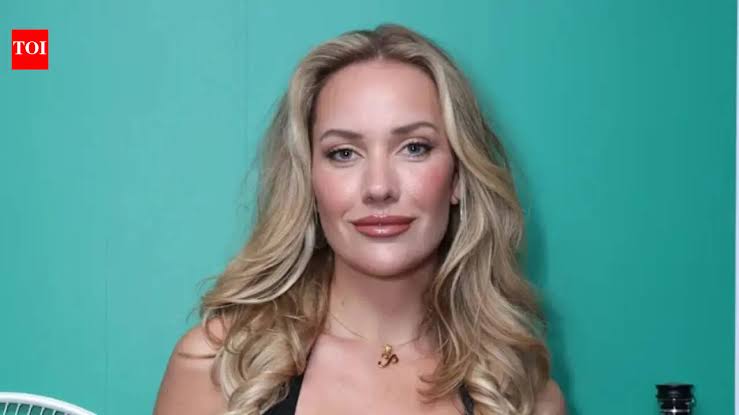
The 2026 NFL Draft starts Thursday night in Pittsburgh, and the spotlight isn’t only on prospects and front offices. Golf influencer Paige Spiranac has again found herself pulled into NFL conversation, this time for her open support of multiple teams.
Get Sports Updates on WhatsApp
Join our WhatsApp channel to receive breaking sports news and insider stories.
Join us on WhatsAppWith the Steelers hosting the first round, her long-standing connection to Pittsburgh has resurfaced. But it’s not just about hometown ties. Her broader fandom, which stretches beyond one franchise, continues to draw mixed reactions at a time when fan loyalty is often treated as non-negotiable.
Paige Spiranac roots for 2 NFL teams: Who are they?
Paige Spiranac has never hidden where her loyalties lie, even if they don’t fit the usual mold. She has consistently pointed to her roots while leaving space for other allegiances.
“Both my parents are from Pittsburgh so I’ve been a Steelers ..fan since the day I was born. I also love the Bills. It’s a complicated relationship…Who’s your team?” she previously asked her followers. It’s a candid admission, one that reflects personal history more than calculated fandom.
Still, the reaction has been sharp. NFL culture tends to rew ..
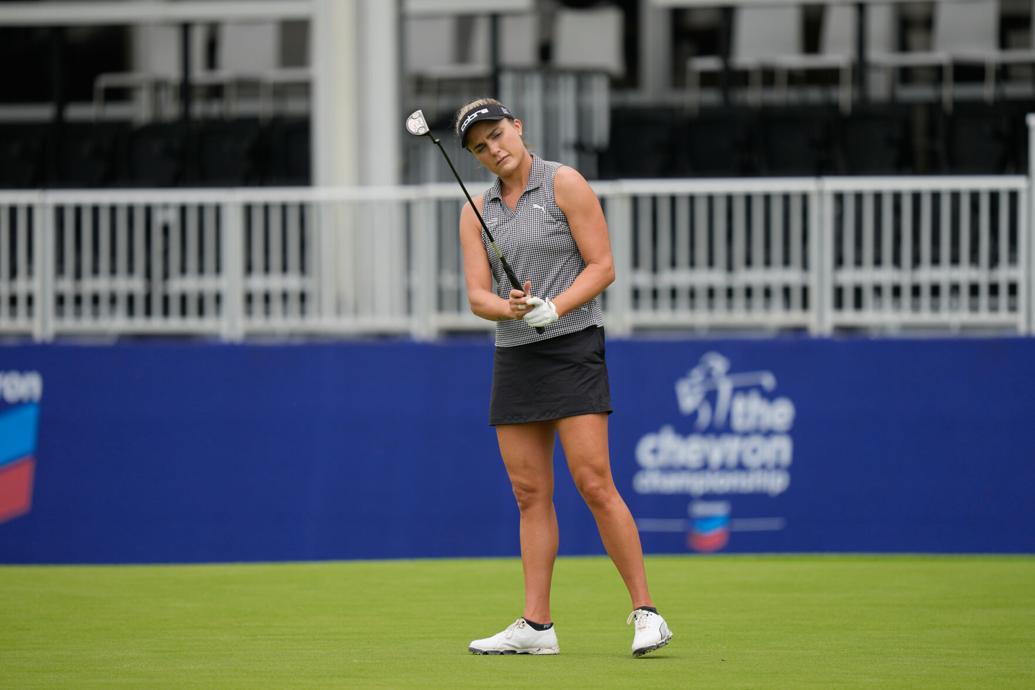
Sometimes the most important work happens when nobody is really watching.
Lexi Thompson was out on the 18th green, working through her putting during a practice round ahead of the Chevron Championship in Houston.
Get Sports Updates on WhatsApp
Join our WhatsApp channel to receive breaking sports news and insider stories.
Join us on WhatsAppIt’s a simple scene, but it shows the kind of quiet preparation that goes into these big tournaments—getting the feel of the greens, adjusting to conditions, and building trust in every stroke.
These are the small details that can shape how a player starts when the pressure kicks in.
Entertainment
Predicting what will happen to Bryson DeChambeau and Phil Mickelson if LIV Golf collapses
It looks like LIV Golf is over.
Get Sports Updates on WhatsApp
Join our WhatsApp channel to receive breaking sports news and insider stories.
Join us on WhatsAppThe Saudi Public Investment Fund has reportedly decided that this league simply isn’t worth the hole it’s burning in their pocket, and they’re pulling funds at the end of 2026.
That gives them less than a year to seek new investment. While CEO Scott O’Neil seems confident, it’s going to be extremely difficult to secure funding for a league that is operating at such eye-watering losses.
So this probably pulls the curtain closed on one of the most turbulent, frustrating, confusing, and ridiculous eras in golfing history. Hopefully, we can all return to some reality after the year is over.
But there is still so much uncertainty surrounding golf’s future thanks to this. Brooks Koepka and Patrick Reed saw the signs early and jumped ship, but they did that with some leverage. So what on earth is going to happen to the rest of these players who didn’t take the olive branch when it was offered to them?
Feelings will be hurt, and careers will be ended. Let’s take a look.
Jon Rahm rejoins the PGA Tour
Koepka returned to the PGA Tour under the returning member program, which saw him pay $5 million to charity, accept that he’ll receive no FedEx Cup bonus money, and agree he cannot be a sponsor exemption for the 2026 signature events.
That same deal was offered to Jon Rahm and Bryson DeChambeau. They didn’t accept it, but a similar offer will likely be handed out to them again.
If LIV Golf folds, Rahm will not hold the same leverage as Koepka did, but he is a bigger star at this stage of his career. Make no mistake, the PGA Tour will want him back immediately.
But Rahm does risk leaving himself without any options at all. Reed didn’t come straight back to the PGA Tour, so he’s spending a year on the DP World Tour first. You’d imagine Rahm would consider doing the same, but it might not be so easy for him.
Rahm is in a feud with the DP World Tour, as the only one of eight players to reject a deal which would have seen him retain his full-time membership. If Rahm agreed to play in six DP World Tour events this year, then he could have played on both LIV Golf and the tour. He did not agree.
For now, his membership is at risk. So, will it be possible for him to spend a season on the DP World Tour like Reed? Maybe not. That makes it all the more likely that Rahm will be back on the PGA Tour the moment LIV folds.
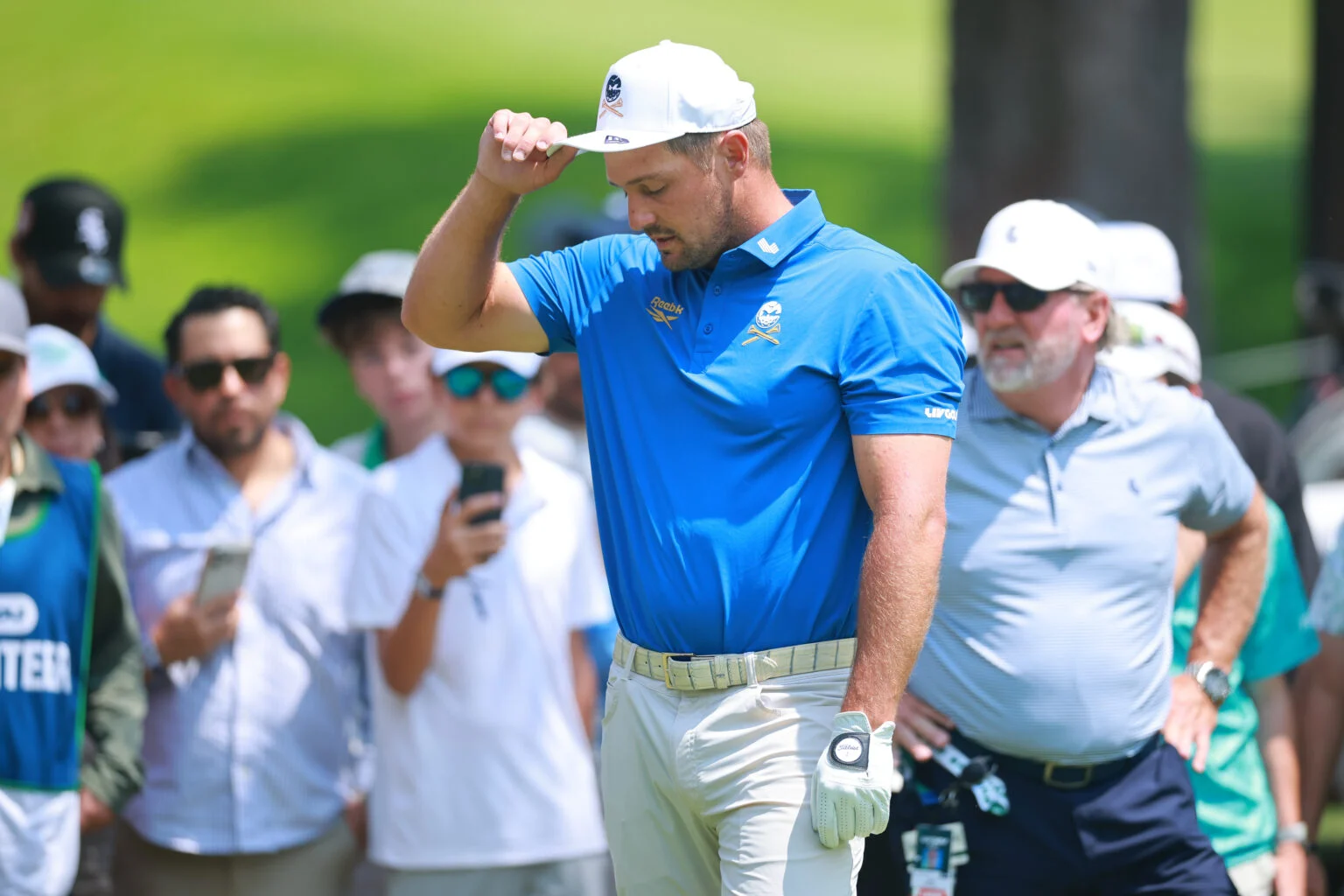
Bryson DeChambeau does YouTube full-time
With DeChambeau, I don’t think it’s as much of a done deal that he returns to the PGA Tour. Not immediately anyway.
He’s been negotiating his contract with LIV, which expires at the end of this season. During these negotiations, he’s made it very clear that he is completely willing to step away from full-time competition and be a full-time YouTuber.
DeChambeau’s channel has over two million subscribers, so he could feasibly do that with all of the money he’s making there.
He was annoyed to see LIV move to a four-day format, so he could commit himself fully to being the content king. It would be a wild thing to do, but it’s also exactly the kind of move you could see the two-time major winner making.
He could qualify for The Open Championship and the US Open, and earn enough points there to play The Masters and the PGA Championship. It’s possible.
He does seem to live for competition, so maybe YouTube won’t quite scratch the itch, but it is on the table for DeChambeau. At least for a year until his suspension expires. Out of Rahm and DeChambeau, the American is absolutely the least likely to take a deal.

Paige Spiranac’s surprising NFL fandom confession triggers heated debate over loyalty, authenticity, and fan culture

Quiet moments on the course can say a lot about what’s coming next.

Predicting what will happen to Bryson DeChambeau and Phil Mickelson if LIV Golf collapses

Lindsey Vonn Turns Heads in Vibrant Red Swimwear During Tropical Getaway

Freakin’ Hot Ski Racer Lindsey Vonn Holds Second-Highest Super-G World Cup Wins

Emma Raducanu Living a Luxury Life: A Rising Star’s Glimpse into the Glamorous World
-
 Entertainment5 months ago
Lindsey Vonn Turns Heads in Vibrant Red Swimwear During Tropical Getaway
-
 Entertainment1 year ago
Freakin’ Hot Ski Racer Lindsey Vonn Holds Second-Highest Super-G World Cup Wins
-
 Entertainment1 year ago
Emma Raducanu Living a Luxury Life: A Rising Star’s Glimpse into the Glamorous World
-

 Entertainment1 year ago
Bra-less Charley Hull turns head by showing off bright red body …’
-

 Entertainment1 year ago
Lexi Thompson Flaunts Her Athletic Physique on the Cover of Golf Magazine
-

 Entertainment1 year ago
Charley Hull Sizzles in Style: The Golf Queen Turning Heads On and Off the Course
-

 Entertainment1 year ago
Paige Spiranac posts 15 private photos: Everyone is talking about
-

 Entertainment1 year ago
Charley Hull Hits the Beach After a Long Day of Golfing